
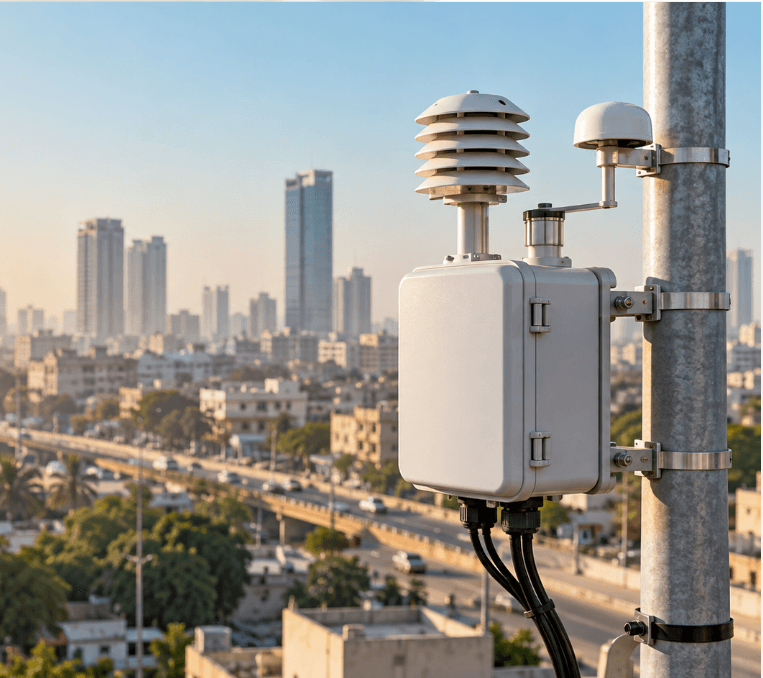
Air Quality Sensor Networks: From Readings to Reliable Decisions
An air-quality dashboard can display a number every few minutes. The harder question is what that number represents and whether it is reliable enough for the decision someone wants to make.
Cities, campuses, industrial sites, and communities may all have reasons to monitor local conditions. An IoT sensor network can add geographic and time-based detail, but useful monitoring starts with a clear purpose, careful placement, and a plan for data quality.
Decide what the network needs to answer
Before selecting devices, define the question. Is the goal to observe changes near a facility, compare locations, identify periods that need investigation, or provide public information?
The answer affects which pollutants and environmental conditions to measure, how often to report, and where sensors should be placed. It also determines how the data should be described to readers. A network built for operational awareness should not automatically be presented as a substitute for a regulatory reference station.
The US Environmental Protection Agency advises air-sensor projects to document their purpose, data-quality objectives, responsibilities, and methods before deployment.
Location changes the meaning of a reading
Two sensors a short distance apart can experience different conditions. Nearby traffic, equipment exhaust, walls, weather exposure, and mounting height can all influence what a device observes.
Select sites that represent the question the project is trying to answer. Record each location and its surroundings. If the network spans several sites, keep installation practices consistent enough for comparisons to be meaningful. Include temperature, humidity, and weather context where relevant to the pollutant and sensor technology.
Build quality checks into the data flow
A live number is not necessarily a valid number. Devices can lose connectivity, drift, report implausible values, or continue showing an old reading after data transmission stops.
A useful monitoring system should show when a measurement was made, when it was received, and whether it passed basic checks. Define how the team will handle missing readings, maintenance periods, suspected faults, and sensor replacement. Where appropriate, compare sensors with a suitable reference instrument or use collocation and correction methods.
EPA’s air-sensor quality-assurance guidance covers project plans, calibration or correction methods, collocation, and checks on collected data. [1] These practices help users understand the limits of a dataset before drawing conclusions from it.
Turn measurements into a response
The goal is to help people recognize patterns and act appropriately. A dashboard might show hourly trends, differences between sites, or periods that warrant investigation. Alerts should identify the location, pollutant, threshold, time, and data-quality status so the recipient can judge the event.
Linked Things describes Smart Climate as a solution for monitoring environmental conditions, including air quality and weather, with IoT sensors and analytics. Its Air Quality live-data module demonstrates the type of connected visibility that can support monitoring workflows. The exact decisions a deployment can support depend on its sensors, installation, maintenance, and validation plan.
Start with a small, well-documented network
A pilot with a few carefully selected locations can establish how often data arrives, which readings require review, how weather affects interpretation, and how much maintenance the network needs. Expand only when the team understands these operating requirements.
An effective air-quality network is more than a map of readings. It is a documented measurement process that tells users what was measured, where, when, and with what level of confidence.
If you are planning environmental monitoring for a facility, campus, or city, contact Linked Things to discuss the monitoring question and the data needed to answer it.