
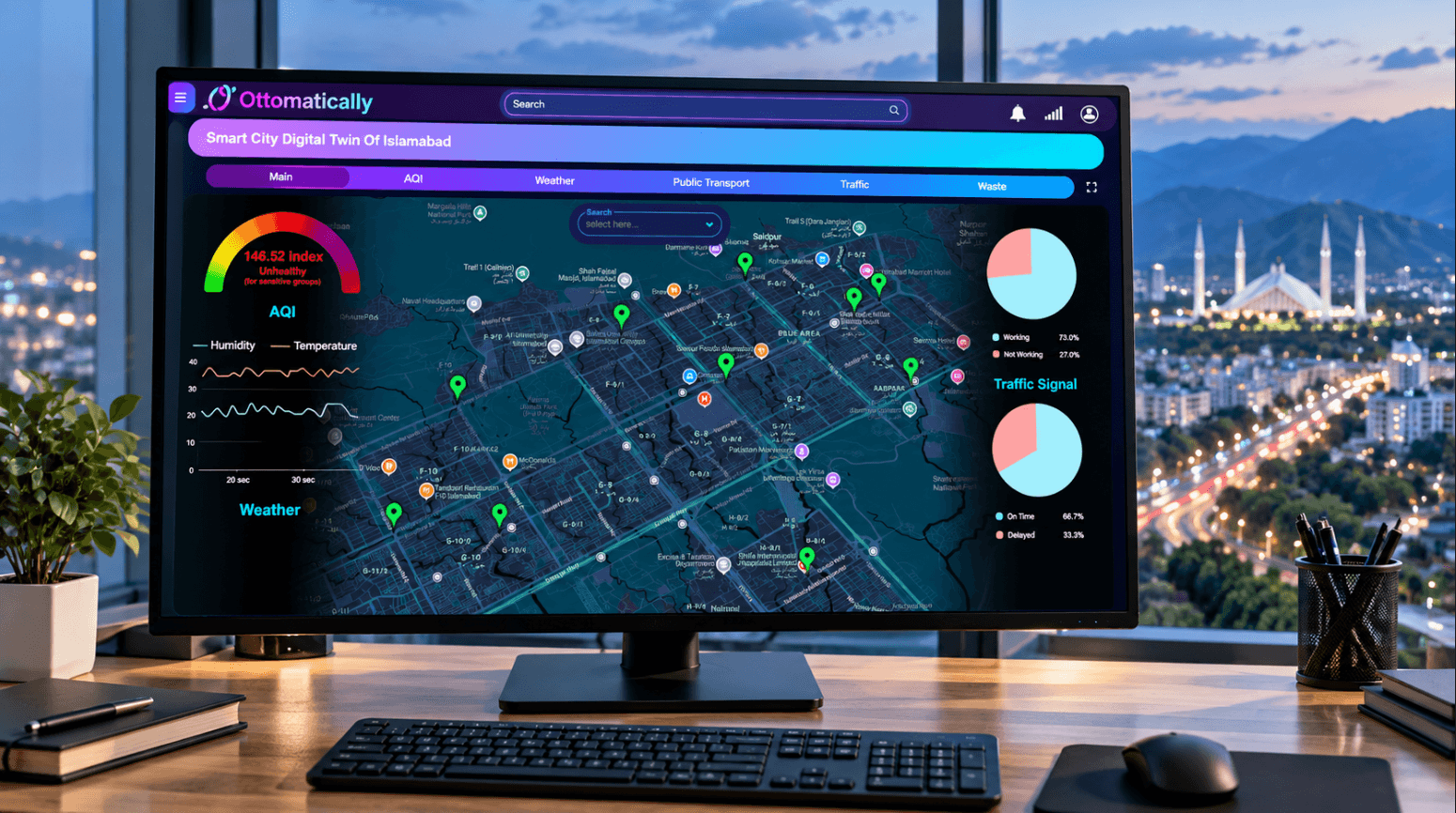
Turning Equipment Data Into Better Decisions
A machine can be running while its performance declines. A chiller can maintain temperature while consuming more electricity. A pump can operate continuously while delivering less flow.
Live monitoring makes these conditions visible. A digital twin connects those measurements with equipment context and models of expected behaviour, helping teams investigate changes and evaluate what to do next.
NIST identifies digital twin applications including machine-health monitoring, prediction of system behaviour, maintenance planning, and evaluation of alternative operating plans.
For manufacturers, the opportunity is to connect equipment data with practical decisions about reliability, production, and energy use.
What Is an Industrial Digital Twin?
An industrial digital twin is a digital representation of a physical asset or system that is updated using data from its physical counterpart. It combines measurements with relevant equipment information and models.
Reliable connectivity, synchronization, and appropriate modelling are central to making this representation useful.
Depending on the equipment and purpose, the inputs may include:
- Operating status, runtime, and settings.
- Temperature, pressure, flow, and vibration.
- Electrical power and energy consumption.
- Production output, cycle times, and downtime reasons.
- Equipment specifications and maintenance history.
A visual representation helps teams understand the equipment. The underlying data and model help them assess its behaviour.
From Live Data to Operational Action
Consider a pump that consumes more electricity while delivering less flow.
Monitoring reveals the change. A digital twin can help investigate it by comparing flow, pressure, power, and speed with expected performance under similar operating conditions.
The comparison may guide an inspection for restrictions, wear, or changes in process demand. It helps narrow the investigation; it does not automatically establish the cause.
A practical decision process follows four steps:
- Identify the change. Determine which measurements have moved away from expected behaviour.
- Review the context. Check operating load, settings, process demand, and recent maintenance.
- Take an action. Assign an inspection or adjustment based on the evidence.
- Measure again. Compare performance under similar conditions after the intervention.
The value comes from completing this process and recording the outcome.
Supporting Maintenance and Reliability
Equipment readings need context. Higher motor current may reflect a heavier load. A vibration change may accompany a different operating speed.
Comparing similar conditions helps maintenance teams distinguish normal variation from changes that deserve attention.
Digital twins can support:
- Tracking equipment condition over time.
- Highlighting deviations from expected behaviour.
- Prioritizing inspections.
- Comparing performance before and after maintenance.
Failure prediction requires stronger evidence than detecting an abnormal trend. NIST emphasizes model validation and quantified uncertainty as foundations for trustworthy digital twins in manufacturing.
Teams should understand where a model has been validated and how much confidence to place in its results.
Understanding Energy Performance
Total electricity consumption provides only part of the picture. Production volume, product mix, operating load, and environmental conditions also affect energy demand.
Connecting these factors allows teams to examine:
- Energy consumed per production unit.
- Electricity used during productive and idle periods.
- Pumping energy per volume delivered.
- Chiller energy relative to measured cooling output.
For example, increased electricity consumption alongside increased production may be expected. Higher energy per unit under comparable conditions provides a stronger reason to investigate.
Where output measurements are unavailable, estimated efficiency indicators should be clearly identified.
Applying Digital Twins to Industrial Equipment
Different assets require different measurements and models. Illustrative applications include:
- Production machines: Investigate cycle-time variation and recurring stoppages using machine states, output, and product information.
- Pumps: Compare flow, pressure, speed, and power to investigate performance losses.
- Chillers: Assess electrical consumption alongside temperatures, flow, and cooling demand.
- Compressors: Review pressure, flow, power, and loaded or unloaded operation.
- Process tanks: Examine temperature, level, and flow in relation to the batch stage.
These applications should begin with a specific operational question. The measurements and model should be selected to answer that question.
Connecting Digital Twins With Linked Things
Linked Things’ Smart Industries solution includes digital twins that integrate live sensor data and analytics with digital representations of physical assets and processes. These representations support monitoring, simulation, and predictive analysis.
The solution also includes production-efficiency monitoring, tank monitoring, predictive maintenance, and quality monitoring, providing related capabilities for understanding industrial operations.
For a digital twin initiative, the starting point is understanding the equipment, the available information, and the decision the business wants to improve.
Start With One Asset
Choose one machine or system with a measurable problem, such as recurring downtime or declining energy performance.
Verify its measurements, establish a baseline, and compare model outputs with actual equipment behaviour. Missing readings, stale values, and sensor faults should remain visible so teams can judge the quality of the information.
Review findings with operators and maintenance teams. Record interventions and measure their outcomes before expanding to more assets.
A useful digital twin connects equipment behaviour to an action whose outcome can be measured. To explore a practical pilot for your facility, contact Linked Things.